Project managers use a variety of terms and concepts to effectively plan, execute, and monitor projects. Here are the top 10 terms that project managers commonly use:
Scope: This refers to the boundaries and objectives of the project, including what is included (in-scope) and what is not included (out of scope).
Timeline: A timeline or project schedule outlines the sequence of activities and their respective durations to complete the project on time.
Budget: Project managers track and manage the budget, which includes all the financial resources allocated to the project.
Risk Management: Project managers identify, assess, and mitigate risks that could impact the project’s success.
PM terminologies Project HQ
Stakeholder: Stakeholders are individuals or groups with an interest in the project, such as sponsors, team members, customers, and suppliers.
Milestone: Milestones are significant events or achievements within a project, often used to measure progress and mark key points in the timeline.
Resource Allocation: This involves assigning and managing the people, equipment, and materials needed to complete project tasks.
Quality Assurance: Project managers ensure that project deliverables meet the predefined quality standards and requirements.
Change Management: Projects often encounter changes in scope, objectives, or requirements. Change management processes help control and document these changes.
Communication Plan: A communication plan outlines how project information is shared among stakeholders, ensuring everyone is informed and engaged throughout the project’s lifecycle.
These terms are fundamental to effective project management and are commonly used in project planning, execution, and reporting. Project managers also use various tools and methodologies to help them manage projects more efficiently, such as Gantt charts, Agile, Scrum, and Six Sigma, to name a few.
Passing the Project Management Professional (PMP) exam from the Project Management Institute (PMI) on your first attempt requires careful preparation and a structured study plan. Here are steps to help you succeed:
Eligibility and Prerequisites:
Ensure you meet the eligibility criteria outlined by PMI. Typically, you need a four-year degree, 36 months of leading projects, and 35 hours of project management education. If you have a secondary degree, you’ll need 60 months of experience and the same 35 hours of education.
Understand the PMP Exam Format:
The PMP exam is a computer-based test consisting of 200 multiple-choice questions.
You have 4 hours to complete the exam.
Questions are based on PMI’s PMBOK (Project Management Body of Knowledge) guide.
Create a Study Plan:
Develop a structured study plan that outlines what you will study and when.
Consider dedicating at least 2-3 months to preparation.
Use PMI’s Official Materials:
PMI provides official study materials, including the PMBOK guide, which is the primary reference for the exam.
Use PMI’s official PMP Handbook for detailed information about the exam and requirements.
Study Resources:
Invest in reputable PMP exam preparation resources, such as textbooks, online courses, practice exams, and flashcards.
Look for materials that align with the latest PMBOK guide edition.
Practice Exams:
Take practice exams regularly to get comfortable with the question format and to assess your knowledge.
Focus on understanding why you got certain questions wrong.
Join a Study Group:
Consider joining or forming a study group with other PMP aspirants.
Group discussions can help clarify concepts and reinforce learning.
Understand PMBOK Concepts:
Master the key concepts in the PMBOK guide, such as the five process groups and ten knowledge areas.
Understand how they relate to each other.
Time Management:
Practice time management during your study sessions to simulate exam conditions.
Focus on Weak Areas:
Identify your weak areas and allocate more study time to them.
Don’t neglect any knowledge area, as each is important for the exam.
Memorization and Understanding:
Don’t just memorize concepts; strive to understand them.
Focus on the application of project management principles.
Simulate Exam Conditions:
Take full-length practice exams under timed conditions to simulate the actual exam experience.
Stay Updated:
Ensure you are studying based on the most recent version of the PMBOK guide and any updates from PMI.
Relaxation and Well-being:
Manage stress and take care of your physical and mental health during your preparation.
Exam Day Preparation:
Get a good night’s sleep before the exam.
Arrive at the testing center well in advance.
Bring required identification and materials as specified by PMI.
During the Exam:
Read questions carefully and thoroughly.
Answer all questions; there is no penalty for guessing.
Use the provided tools (scratch paper or on-screen calculator) if needed.
Manage your time wisely.
Review and Double-Check:
Before submitting your exam, review your answers if time allows.
Post-Exam:
Celebrate your accomplishment.
If you pass, focus on maintaining your PMP certification through continuing education.
Remember that the PMP exam is challenging, and success depends on thorough preparation. Stay committed, stick to your study plan, and approach each question methodically to increase your chances of passing on your first attempt.
https://www.projecthq.live/wp-content/uploads/2023/10/logo-1c.png00adminhttps://www.projecthq.live/wp-content/uploads/2023/10/logo-1c.pngadmin2023-09-29 10:51:012023-09-29 11:38:55Passing the Project Management Professional (PMP) exam from the Project Management Institute (PMI) on your first attempt
Project management involves planning, executing, and controlling a project from start to finish to achieve specific goals within a set timeframe and budget. Various tools and techniques are available to help project managers effectively manage their projects. Here are some essential project management tools and techniques:
1. Project Management Software:
Microsoft Project: A popular project management software for creating schedules, tracking progress, and managing resources.
Trello: A visual task and project management tool that uses boards, lists, and cards to organize tasks.
Asana: A versatile project management tool that offers task management, team collaboration, and project tracking features.
Jira: Particularly useful for software development projects, Jira helps manage tasks, track issues, and facilitate agile development.
2. Gantt Charts: Gantt charts are visual representations of project schedules. They help project managers plan tasks, assign resources, and track progress over time.
3. Work Breakdown Structure (WBS): A hierarchical breakdown of project tasks into smaller, manageable components. It helps define the scope of the project and provides a clear view of the work to be done.
4. Critical Path Method (CPM): CPM is a technique for identifying the sequence of tasks that must be completed on time to ensure the project finishes as planned. It helps identify the critical path, which is the longest path through the project schedule.
5. PERT (Program Evaluation and Review Technique): PERT is a probabilistic project management technique that uses three estimates for each task duration: optimistic, pessimistic, and most likely. It calculates a weighted average to estimate project duration and identify critical tasks.
6. Agile Project Management: Agile methodologies like Scrum and Kanban focus on iterative development and customer collaboration. They emphasize flexibility and adaptability to changing project requirements.
7. Earned Value Management (EVM): EVM is a project performance measurement technique that integrates scope, schedule, and cost measurements to assess project progress. It helps project managers track the value of work completed relative to the planned cost.
8. Risk Management: Risk management tools and techniques help identify, assess, and mitigate project risks. Tools like risk matrices, risk registers, and Monte Carlo simulations can be used to manage uncertainties.
9. Communication Tools: Effective communication is crucial in project management. Tools like email, instant messaging, project management software, and collaboration platforms facilitate communication among team members and stakeholders.
10. Resource Management Tools: These tools help allocate and manage resources efficiently. Resource calendars, resource leveling, and resource allocation matrices are examples of resource management techniques.
11. Quality Management Tools: Quality management tools, such as Six Sigma, Total Quality Management (TQM), and quality control charts, help ensure that project deliverables meet quality standards.
12. Stakeholder Analysis and Engagement Tools: Techniques like stakeholder analysis matrices and communication plans help identify and engage with project stakeholders effectively.
13. Change Control Tools: Change control boards, change request forms, and change impact assessments help manage changes to project scope, schedule, or budget.
14. Issue Tracking Tools: These tools help track and manage project issues, ensuring they are resolved promptly to avoid project delays.
15. Lessons Learned Repositories: Documenting lessons learned throughout the project helps improve future project management processes.
Selecting the right combination of tools and techniques depends on the project’s size, complexity, and specific requirements. Effective project managers often adapt and combine various tools and techniques to suit their project’s unique needs.
Project management software is continually evolving, so it’s a good idea to check the latest reviews and updates to make an informed decision.
As of my last update, some popular project management software options included:
Trello: Trello is known for its simple and intuitive Kanban-style boards, which make it easy to visualize and manage tasks and projects. It’s great for smaller teams and less complex projects.
Asana: Asana offers a wide range of project management features and is suitable for teams of all sizes. It allows you to create tasks, set deadlines, and track progress in a collaborative environment.
Monday.com: Monday.com provides a flexible platform for managing projects, workflows, and team collaboration. It’s highly customizable and can adapt to various project management needs.
Basecamp: Basecamp is known for its simplicity and focus on communication and collaboration. It’s suitable for smaller teams and projects that require streamlined communication.
Jira: Jira, developed by Atlassian, is often used by software development teams for agile project management and issue tracking. It’s powerful and highly customizable but may have a steeper learning curve.
Smartsheet: Smartsheet is a versatile platform that combines the ease of use of spreadsheets with project management features. It’s often used for more complex project tracking and resource management.
Wrike: Wrike offers project management, collaboration, and workflow automation features. It’s used by a wide range of teams, from marketing to engineering, for managing projects and tasks.
ClickUp: ClickUp is a comprehensive project management tool with features for task management, goal tracking, and time tracking. It’s suitable for various industries and team sizes.
Notion: While Notion is more than just project management software, it’s highly customizable and can be adapted to create project management workflows. It’s particularly popular among smaller teams.
Teamwork: Teamwork provides project management and team collaboration features, including task tracking, time tracking, and document management.
To find the best project management software for your needs in 2023, I recommend considering your specific requirements, team size, budget, and the complexity of your projects. Read user reviews, request demos or trials, and stay up to date with the latest developments in the project management software space to make an informed choice.
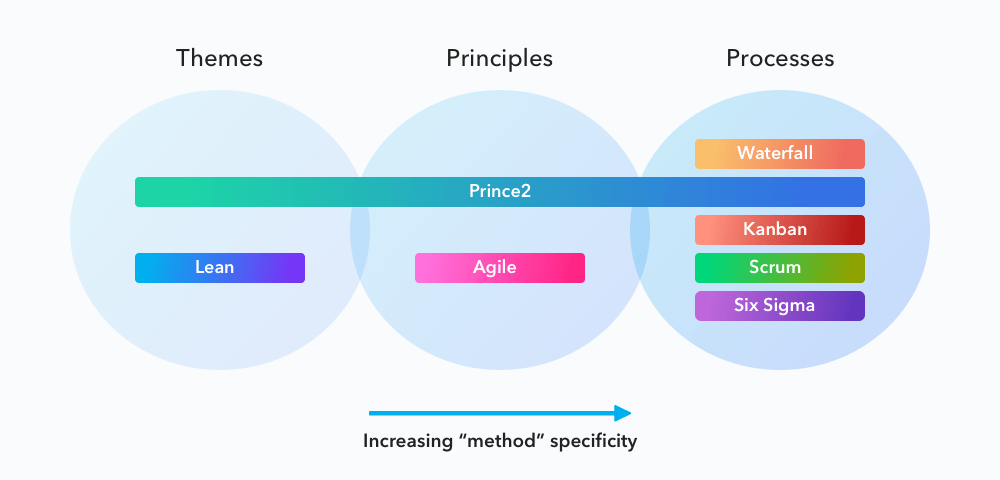
Project management methodologies are systematic approaches or frameworks that help organizations and project managers plan, execute, monitor, and control projects more effectively. Different methodologies are suited to different types of projects, and they provide guidelines, processes, and best practices to ensure successful project delivery. Here are some popular project management methodologies:
Waterfall Methodology:
Sequential Approach: Waterfall is a linear and sequential methodology where each phase must be completed before moving on to the next.
Phases: Typically, it consists of phases such as requirements, design, implementation, testing, deployment, and maintenance.
Documentation-Driven: Emphasizes thorough documentation at each phase.
Agile Methodology:
Iterative and Incremental: Agile divides a project into small increments with minimal planning, and work is done in short iterations.
Flexibility: Emphasizes adaptability and collaboration with stakeholders throughout the project.
Scrum, Kanban, and Extreme Programming (XP) are popular Agile frameworks.
Scrum:
Framework: A subset of Agile, Scrum focuses on teamwork, accountability, and iterative progress.
Roles: Involves roles like Scrum Master, Product Owner, and Development Team.
Artifacts: Uses artifacts like the Product Backlog, Sprint Backlog, and Burndown charts.
Kanban:
Visual Management: Kanban is a visual system for managing work as it moves through various stages of a process.
Pull System: Work is pulled into the next stage when there is capacity, rather than pushed through the process.
Continuous Improvement: Encourages continuous process improvement.
Lean Project Management:
Minimize Waste: Focuses on minimizing waste and optimizing processes to deliver value efficiently.
Value Stream Mapping: Identifies value-adding and non-value-adding activities in processes.
Just-in-Time (JIT): Aims to deliver products or services just when they are needed.
PRINCE2 (PRojects IN Controlled Environments):
Process-Oriented: PRINCE2 provides a detailed and structured framework with defined processes, roles, and responsibilities.
Phases: Divides projects into initiation, planning, execution, monitoring, and closure stages.
Focus on Business Justification: Ensures projects are aligned with business goals.
PMI’s Project Management Body of Knowledge (PMBOK):
Guide: PMBOK is a framework and guide published by the Project Management Institute (PMI).
Processes: Defines a set of processes and knowledge areas essential for project management.
Standardization: Provides a common language and best practices for project management.
Critical Chain Project Management (CCPM):
Focus on Resource Constraints: CCPM emphasizes managing and mitigating resource constraints to reduce project durations.
Buffer Management: Uses project buffers to protect against uncertainties and variability.
Agile Hybrid Approaches:
Combination: Some organizations combine Agile and traditional methodologies to create hybrid approaches that suit their specific needs.
PRiSM (Projects integrating Sustainable Methods):
Sustainability Focus: PRiSM integrates sustainability principles into project management.
The choice of methodology depends on factors like project type, size, complexity, organizational culture, and stakeholder preferences. Some organizations even customize methodologies to align with their unique requirements. The key is to select and implement a methodology that best supports the successful delivery of a project’s objectives.
Project management is the discipline of planning, organizing, executing, and controlling resources and tasks to achieve specific goals or objectives within a defined timeframe. It is a systematic approach used in various industries and fields to successfully complete projects. Project management involves coordinating people, processes, and resources to deliver a project on time, within budget, and with the desired quality and scope.
Key components of project management include:
Project Initiation: This phase involves defining the project’s objectives, scope, stakeholders, and constraints. It’s where the project is formally authorized and its feasibility is assessed.
Planning: During this stage, project managers create a detailed project plan. This includes defining tasks, estimating resource requirements, setting timelines, establishing budgets, and identifying potential risks.
Execution: In the execution phase, the project plan is put into action. Team members perform the assigned tasks, and project managers oversee the work, manage resources, and ensure that the project stays on track.
Monitoring and Controlling: Throughout the project’s lifecycle, project managers track progress, compare it to the plan, and take corrective actions as needed. They also manage changes to the project scope or objectives and address any issues or risks that arise.
Closing: Once all project objectives are met, the project is closed out. This includes formal acceptance of deliverables by stakeholders, the release of project resources, and a review to document lessons learned.
Project management methodologies, such as Waterfall, Agile, Scrum, and Kanban, provide specific frameworks and techniques for managing projects. The choice of methodology depends on the project’s nature, requirements, and organizational preferences.
Effective project management ensures that projects are completed efficiently, on time, within budget, and with the expected quality. It also helps in risk management, stakeholder communication, and the optimization of resources. Project managers play a crucial role in guiding projects from initiation to successful completion while balancing competing constraints.
The salary of a project manager in 2023 can vary significantly depending on factors such as location, industry, level of experience, and the specific responsibilities of the role. However, I can provide you with a general range based on historical data and trends up to my last knowledge update in September 2021.
In the United States, for example, the salary of a project manager can range from approximately $60,000 to well over $150,000 per year or more. Here’s a breakdown by experience level:
Entry-Level Project Manager: Entry-level project managers with little to no experience might earn around $60,000 to $80,000 per year.
Mid-Level Project Manager: Those with a few years of experience and a track record of successful projects can earn salaries in the range of $80,000 to $120,000 or more.
Senior Project Manager: Highly experienced project managers who manage larger, more complex projects or teams can earn salaries exceeding $120,000, and it’s not uncommon for them to earn over $150,000 or even $200,000, especially in high-cost-of-living areas.
Please keep in mind that these figures are approximate, and actual salaries can vary widely based on location and other factors. Salaries for project managers can also be influenced by the industry they work in. For example, project managers in the technology or finance sectors may earn higher salaries compared to those in nonprofit organizations or government.
To get the most accurate and up-to-date information on project manager salaries in 2023, I recommend checking salary surveys, job postings, and salary negotiation resources in your specific location and industry.
https://www.projecthq.live/wp-content/uploads/2023/10/logo-1c.png00adminhttps://www.projecthq.live/wp-content/uploads/2023/10/logo-1c.pngadmin2023-09-28 14:51:192023-09-29 09:56:53Salary of a Project Manager in 2023
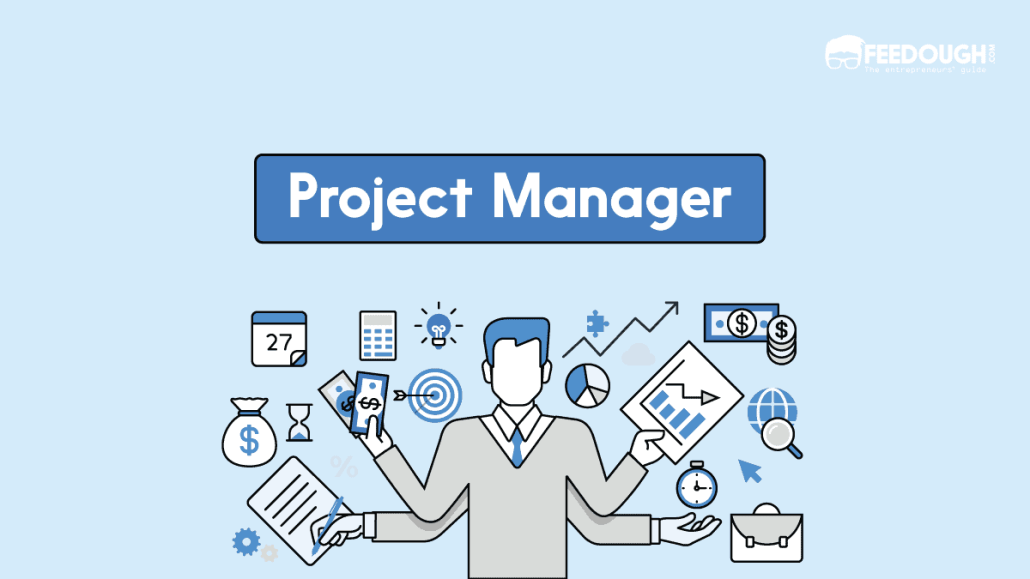
A project manager plays a crucial role in planning, executing, and completing projects successfully. Their primary responsibility is to ensure that a project meets its goals, stays within budget, and is completed on time. Here are some of the key roles and responsibilities of a project manager:
Project Planning: Project managers are responsible for defining the project scope, objectives, and deliverables. They create a detailed project plan, outlining the tasks, timelines, and resources required for successful project completion.
Team Leadership: Project managers assemble and lead project teams. They assign tasks, set clear expectations, and ensure that team members have the necessary resources and support to complete their work effectively.
Communication: Effective communication is critical in project management. Project managers facilitate communication between team members, stakeholders, and clients. They provide regular project updates, address concerns, and ensure everyone is on the same page.
Risk Management: Identifying and managing risks is an essential part of a project manager’s role. They assess potential risks, develop risk mitigation strategies, and monitor risk throughout the project’s lifecycle.
Budget Management: Project managers are responsible for creating and managing the project budget. They track expenses, control costs, and ensure that the project remains financially viable.
Quality Control: Project managers monitor the quality of work throughout the project to ensure that it meets the defined standards and expectations. They implement quality assurance processes and make necessary adjustments to maintain quality.
Time Management: Meeting project deadlines is crucial. Project managers create schedules, track progress, and make adjustments as needed to ensure that the project stays on track.
Scope Management: Scope creep, or the uncontrolled expansion of project scope, can lead to project delays and budget overruns. Project managers carefully manage scope changes and ensure that they are properly documented and approved.
Stakeholder Management: Project managers identify and engage with key stakeholders, including clients, team members, and external parties. They address stakeholder concerns and ensure that their needs are met.
Problem Solving: Challenges and issues are bound to arise during a project. Project managers are responsible for identifying problems, finding solutions, and keeping the project on course.
Documentation: Comprehensive project documentation is crucial for tracking progress and ensuring accountability. Project managers maintain records of project plans, status reports, meeting minutes, and other relevant documentation.
Closure: When a project is completed, project managers ensure that all deliverables are met, conduct a project review or evaluation to learn from the project’s successes and failures, and formally close the project.
Continuous Improvement: After completing a project, project managers often conduct post-project reviews to identify areas for improvement in future projects. They apply lessons learned to enhance their project management processes.
Overall, a project manager’s role is multifaceted and requires a combination of technical knowledge, leadership skills, communication abilities, and problem-solving capabilities to successfully deliver projects and achieve project objectives.
https://www.projecthq.live/wp-content/uploads/2023/10/logo-1c.png00adminhttps://www.projecthq.live/wp-content/uploads/2023/10/logo-1c.pngadmin2023-09-28 14:46:382023-09-29 09:57:00What Does Project A Managers Do ?
Project managers require a combination of technical and soft skills to effectively plan, execute, and complete projects while managing teams and stakeholders. Here are some must-have soft skills for a project manager:
Communication: Clear and effective communication is paramount. Project managers need to convey ideas, expectations, and updates to team members, stakeholders, and clients. Active listening is also crucial for understanding others’ needs and concerns.
Leadership: Project managers must inspire and guide their teams. They need to make decisions, delegate tasks, and provide direction. Leading by example and being a role model for professionalism and commitment are key.
Problem Solving: Project managers encounter various challenges during a project’s lifecycle. Being able to identify issues, analyze their root causes, and develop solutions is vital. They should encourage team members to propose solutions as well.
Time Management: Effective time management is essential for meeting project deadlines. This includes setting priorities, creating schedules, and ensuring tasks are completed on time.
Adaptability: Projects rarely go exactly as planned. Project managers should be adaptable and open to change, adjusting their strategies when necessary to accommodate unexpected circumstances.
Stakeholder Management: Project managers must build and maintain positive relationships with stakeholders, including clients, team members, and sponsors. This involves understanding their needs, addressing concerns, and keeping them informed.
Conflict Resolution: Conflicts can arise among team members or with stakeholders. Project managers need conflict resolution skills to address these issues in a constructive and timely manner.
Negotiation: Negotiation skills are essential when dealing with project scope changes, resource allocation, and budget issues. Project managers must find win-win solutions that benefit both the project and the stakeholders involved.
Risk Management: Identifying and assessing risks, as well as developing risk mitigation plans, are critical aspects of project management. Being proactive in managing risks can help prevent issues from derailing the project.
Emotional Intelligence: Understanding and managing one’s emotions and the emotions of others is crucial for building strong relationships and fostering a positive project environment.
Team Building: Building a cohesive and high-performing team is a key responsibility of project managers. This involves recognizing team members’ strengths and weaknesses and finding ways to motivate and support them.
Resource Management: Project managers need to allocate resources effectively, including human resources, budget, and equipment, to ensure project success.
Customer Focus: Keeping the customer’s needs and satisfaction in mind is vital, as projects often exist to deliver value to clients or end-users.
Quality Management: Ensuring that the project delivers a high-quality outcome is important. This includes setting and maintaining quality standards throughout the project.
Ethical Decision-Making: Project managers should make ethical decisions, considering the long-term consequences and impact on stakeholders.
Crisis Management: When unexpected crises or issues arise, project managers should remain calm and take decisive action to address the situation.
These soft skills are essential for project managers to excel in their roles and lead successful projects. While technical skills and knowledge are important, it’s often the soft skills that make the critical difference in managing people, resources, and the complexities of projects.
https://www.projecthq.live/wp-content/uploads/2023/10/logo-1c.png00adminhttps://www.projecthq.live/wp-content/uploads/2023/10/logo-1c.pngadmin2023-09-28 14:17:242023-09-29 09:57:08Must Have Soft Skills for a Project Manager
In 2023, there are several project management certifications that you may want to consider, depending on your career goals and the specific industry you work in. Here are some popular project management certifications:
Project Management Professional (PMP): Offered by the Project Management Institute (PMI), the PMP certification is one of the most recognized and respected project management certifications globally. It focuses on best practices and is suitable for experienced project managers.
Certified Associate in Project Management (CAPM): Also from PMI, the CAPM certification is designed for individuals who are new to project management or want to gain a foundational understanding of project management concepts.
Certified ScrumMaster (CSM): If you work in an Agile environment, the CSM certification offered by the Scrum Alliance can be valuable. It focuses on Scrum principles and practices.
Certified Product Owner (CSPO): Also from the Scrum Alliance, the CSPO certification is aimed at those responsible for product development and focuses on Agile product management.
PRINCE2 (Projects IN Controlled Environments): PRINCE2 is a widely recognized project management framework, especially in the United Kingdom and Europe. Consider obtaining the PRINCE2 Foundation and Practitioner certifications.
Certified Project Manager (CPM): Offered by the International Association of Project Managers (IAPM), the CPM certification covers a wide range of project management methodologies and is suitable for both new and experienced project managers.
Certified Project Management Practitioner (CPMP): This certification from the American Academy of Project Management (AAPM) is designed for experienced project managers and covers various project management topics.
Certified Scrum Professional (CSP): If you’re looking to advance your Scrum knowledge and skills beyond the CSM, the CSP certification is a logical next step. It focuses on advanced Scrum concepts and practices.
Certified Agile Project Manager (IAPM): The International Association of Project Managers (IAPM) offers this certification, which combines Agile and traditional project management approaches.
Certified Project Management Professional (CPMP): Offered by the Global Association for Quality Management (GAQM), this certification covers project management processes and methodologies.
Certified Lean Six Sigma Green Belt or Black Belt: While not strictly project management certifications, Lean Six Sigma certifications can be valuable for project managers who want to improve processes and reduce defects within their projects.
Certification in Risk Management Assurance (CRMA): If risk management is a key aspect of your projects, consider the CRMA certification from the Institute of Internal Auditors (IIA). It focuses on risk assessment and assurance.
Before choosing a certification, consider your career goals, the specific requirements of your industry, and whether you prefer traditional project management methodologies or Agile approaches. Additionally, check the latest requirements and prerequisites for each certification, as they may have changed since my last knowledge update in September 2021
https://www.projecthq.live/wp-content/uploads/2023/10/logo-1c.png00adminhttps://www.projecthq.live/wp-content/uploads/2023/10/logo-1c.pngadmin2023-09-28 13:53:232023-09-29 09:57:23Project Management Certification Courses to consider in 2023



 PM terminologies Project HQ