
Tag Archive for: techniques

Agile estimation techniques are used in Agile software development methodologies, such as Scrum and Kanban, to estimate the effort, time, and complexity of various tasks or user stories within a project. These techniques help teams make informed decisions, prioritize work, and plan their iterations effectively. Here are some common Agile estimation techniques:

  1. Planning Poker (Relative Estimation): In Planning Poker, team members use a deck of cards with numbers representing estimates (e.g., Fibonacci sequence or modified Fibonacci sequence) to estimate the relative size or complexity of user stories. Team members discuss their estimates and reach a consensus. This technique encourages team collaboration and avoids anchoring bias.
  2. T-shirt Sizing: Instead of using numbers, teams can use t-shirt sizes (XS, S, M, L, XL) to estimate user stories. This technique is less precise than Planning Poker but can be quicker and is useful for high-level estimations.
  3. Dot Voting: Each team member is given a certain number of dots (votes), and they use these dots to vote on the estimated effort or complexity of user stories. It’s a simple and quick way to prioritize items on a backlog.
  4. Bucket System: In the bucket system, user stories are divided into different buckets based on their complexity or size, such as “Small,” “Medium,” and “Large.” This approach is less granular than Planning Poker and can be faster for estimating large backlogs.
  5. Story Points: Teams assign story points to user stories based on their complexity and effort required. Story points are a relative measurement and don’t represent specific units of time. Common scales include Fibonacci or powers of 2.
  6. Ideal Days or Hours: Some teams prefer to estimate in ideal days or hours, representing the actual time they expect a task to take if no interruptions or delays occur. This technique is less common in Agile but may be used in some situations.
  7. Reference Stories: Teams use previously completed user stories as reference points to estimate new ones. This approach leverages historical data and helps maintain consistency in estimation.
  8. Three-Point Estimation: This technique involves assigning three values to each user story: the best-case estimate, the worst-case estimate, and the most likely estimate. These values are used to calculate a weighted average, providing a more probabilistic estimate.
  9. Affinity Estimation: This technique involves grouping user stories into categories or clusters based on their similarities in complexity or effort. It can help identify patterns and simplify estimation.
  10. Monte Carlo Simulation: Teams use statistical techniques and simulations to estimate project completion dates and identify potential risks. It involves running multiple simulations to account for uncertainty in estimates.

Remember that Agile estimation is not about achieving perfect accuracy but about facilitating communication, collaboration, and prioritization within the team. Teams should continually refine their estimation techniques and adapt them to their specific needs and context.
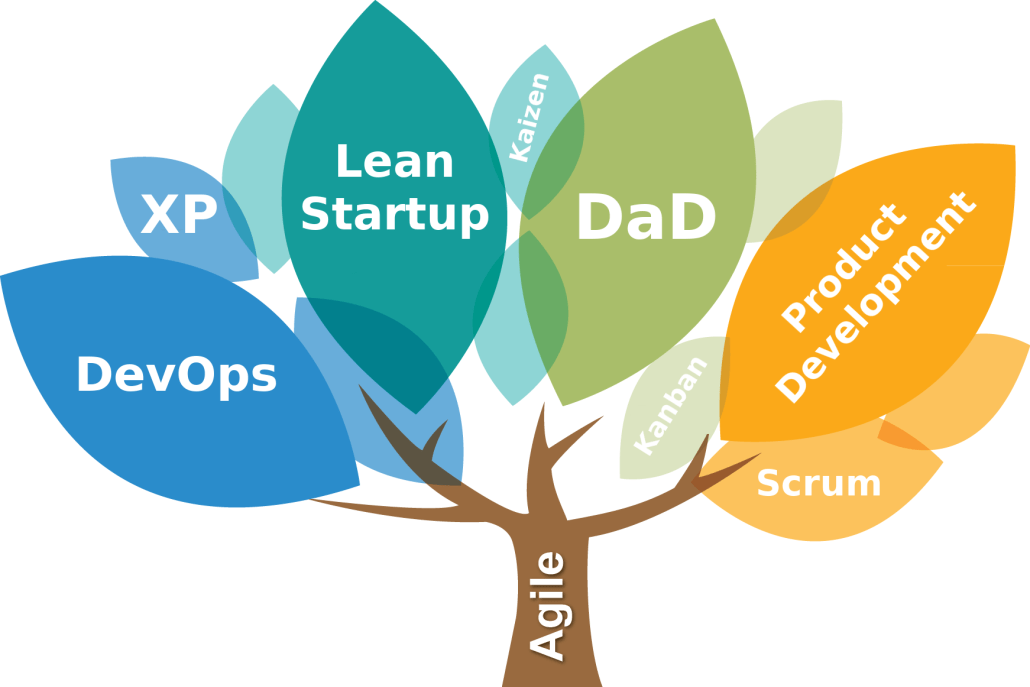
Agile is a project management and product development approach that emphasizes flexibility, collaboration, customer feedback, and continuous improvement. There are various tools and techniques used in Agile methodologies to facilitate the Agile process. Here are some of the most common ones:

1. User Stories: User stories are simple, concise descriptions of a feature from an end user’s perspective. They are used to define the functionality that needs to be developed and serve as the basis for prioritizing work.

2. Kanban Boards: Kanban is a visual management tool that helps teams track work items through various stages of development. It uses columns to represent stages of work (e.g., To Do, In Progress, Done) and cards to represent individual tasks or user stories.

3. Scrum Framework: Scrum is an Agile framework that divides work into time-boxed iterations called sprints. It includes roles like Scrum Master and Product Owner, as well as events like Daily Standups, Sprint Planning, Sprint Review, and Sprint Retrospective.

4. Sprint Backlog: The sprint backlog is a list of tasks or user stories that a development team commits to completing during a sprint. It is a subset of the product backlog.

5. Burndown Charts: Burndown charts are used to visualize the progress of work during a sprint. They show the remaining work (usually in story points or hours) over time, helping teams stay on track to meet their sprint goals.

6. Velocity: Velocity is a metric used in Scrum to measure the amount of work a team can complete in a sprint. It helps with estimating how much work can be done in future sprints.

7. Daily Standup Meetings: Also known as Daily Scrum meetings, these are short, daily meetings where team members discuss what they worked on the previous day, what they plan to work on today, and any obstacles they are facing.

8. Retrospectives: After each sprint, teams hold retrospective meetings to reflect on what went well, what didn’t, and how to improve their processes. This encourages continuous improvement.

9. Test-Driven Development (TDD): TDD is a software development technique where tests are written before the code. It ensures that the code meets the desired functionality and can be used for regression testing.

10. Continuous Integration (CI) and Continuous Deployment (CD): CI/CD tools automate the process of integrating code changes into a shared repository, running automated tests, and deploying to production. This promotes a continuous delivery pipeline.

11. Pair Programming: In pair programming, two developers work together at one computer. One writes the code, and the other reviews it in real-time. It promotes collaboration and improves code quality.

12. Agile Estimation Techniques: Methods like Planning Poker or Relative Sizing are used to estimate the effort required for user stories or tasks. This helps with prioritization and sprint planning.

13. Story Mapping: Story mapping is a visual technique that helps teams understand the big picture of a project by arranging user stories into a logical sequence or map.

14. Burnup Charts: Similar to burndown charts, burnup charts show both completed and planned work over time. They provide a clearer view of progress, especially when scope changes.

These are just some of the many tools and techniques used in Agile methodologies. The specific tools and techniques employed can vary depending on the Agile framework (e.g., Scrum, Kanban) and the needs of the team or organization.

Project management involves planning, executing, and controlling a project from start to finish to achieve specific goals within a set timeframe and budget. Various tools and techniques are available to help project managers effectively manage their projects. Here are some essential project management tools and techniques:

1. Project Management Software:

  • Microsoft Project: A popular project management software for creating schedules, tracking progress, and managing resources.
  • Trello: A visual task and project management tool that uses boards, lists, and cards to organize tasks.
  • Asana: A versatile project management tool that offers task management, team collaboration, and project tracking features.
  • Jira: Particularly useful for software development projects, Jira helps manage tasks, track issues, and facilitate agile development.

2. Gantt Charts: Gantt charts are visual representations of project schedules. They help project managers plan tasks, assign resources, and track progress over time.

3. Work Breakdown Structure (WBS): A hierarchical breakdown of project tasks into smaller, manageable components. It helps define the scope of the project and provides a clear view of the work to be done.

4. Critical Path Method (CPM): CPM is a technique for identifying the sequence of tasks that must be completed on time to ensure the project finishes as planned. It helps identify the critical path, which is the longest path through the project schedule.

5. PERT (Program Evaluation and Review Technique): PERT is a probabilistic project management technique that uses three estimates for each task duration: optimistic, pessimistic, and most likely. It calculates a weighted average to estimate project duration and identify critical tasks.

6. Agile Project Management: Agile methodologies like Scrum and Kanban focus on iterative development and customer collaboration. They emphasize flexibility and adaptability to changing project requirements.

7. Earned Value Management (EVM): EVM is a project performance measurement technique that integrates scope, schedule, and cost measurements to assess project progress. It helps project managers track the value of work completed relative to the planned cost.

8. Risk Management: Risk management tools and techniques help identify, assess, and mitigate project risks. Tools like risk matrices, risk registers, and Monte Carlo simulations can be used to manage uncertainties.

9. Communication Tools: Effective communication is crucial in project management. Tools like email, instant messaging, project management software, and collaboration platforms facilitate communication among team members and stakeholders.

10. Resource Management Tools: These tools help allocate and manage resources efficiently. Resource calendars, resource leveling, and resource allocation matrices are examples of resource management techniques.

11. Quality Management Tools: Quality management tools, such as Six Sigma, Total Quality Management (TQM), and quality control charts, help ensure that project deliverables meet quality standards.

12. Stakeholder Analysis and Engagement Tools: Techniques like stakeholder analysis matrices and communication plans help identify and engage with project stakeholders effectively.

13. Change Control Tools: Change control boards, change request forms, and change impact assessments help manage changes to project scope, schedule, or budget.

14. Issue Tracking Tools: These tools help track and manage project issues, ensuring they are resolved promptly to avoid project delays.

15. Lessons Learned Repositories: Documenting lessons learned throughout the project helps improve future project management processes.

Selecting the right combination of tools and techniques depends on the project’s size, complexity, and specific requirements. Effective project managers often adapt and combine various tools and techniques to suit their project’s unique needs.